Winter's classification of impacted molars
Explainer · about 6 min · Sample, pending dentist review · Audio summary 0:53, synthetic voice
- 01What is being classified
- 02The four common angulations
- 03Reading it on a radiograph
- 04Winter and Pell and Gregory
- 05Exam tips
The outline of the script. Times appear here once the video is cut. The audio is a one-minute summary, not the full explainer.
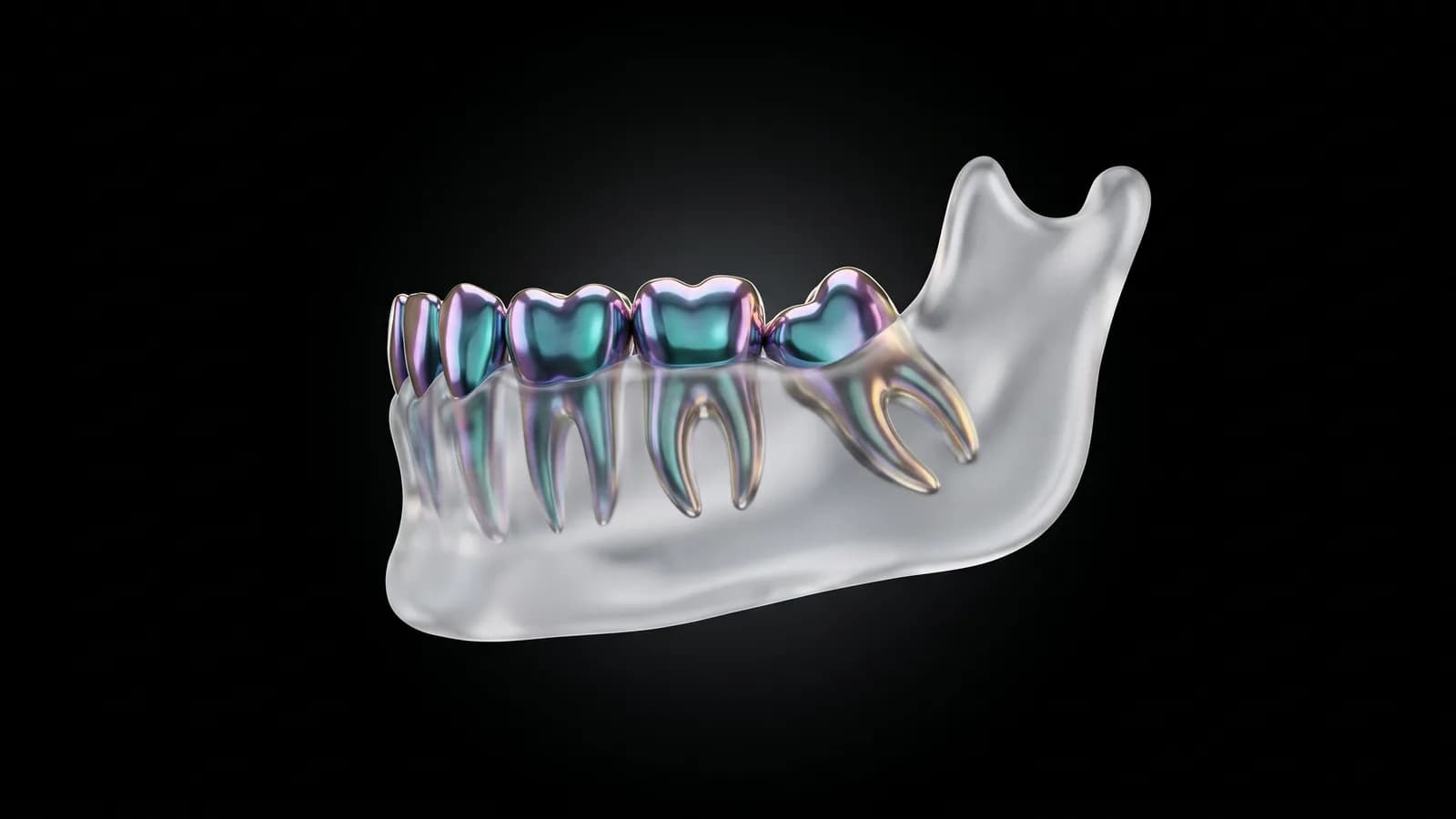
- Winter's classification describes an impacted mandibular third molar by the tilt of its long axis against the long axis of the second molar.
- The main types are mesioangular, distoangular, vertical and horizontal. Buccoangular, linguoangular and inverted positions are also described.
- Mesioangular is the most common type. Distoangular is usually the hardest to remove.
- Pell and Gregory is a different system: it grades depth against the occlusal plane (A, B, C) and the space in front of the ramus (Class I, II, III).
Sample, pending dentist review.
Transcript of the audio summary
Winter's classification, in one minute. It describes an impacted mandibular third molar by its tilt: the angle of its long axis against the long axis of the second molar. There are four main types: mesioangular, distoangular, vertical and horizontal. Buccoangular, linguoangular and inverted positions are also described. Mesioangular is the most common, and distoangular is usually the hardest to remove. Do not confuse it with Pell and Gregory. That is a different system, which grades how deep the tooth lies against the occlusal plane, as position A, B or C, and how much space there is in front of the ramus, as class one, two or three. Winter tells you the angle. Pell and Gregory tell you the depth and the space.